In 2026, premium DTC customers open your package with high expectations. Many feel disappointed when the experience falls flat and they share negative feedback online[^1].
The key to a “wow” unboxing in 2026 lies in thoughtful tactile details, sustainable materials, and flawless execution[^2] that turns every delivery into an emotional brand moment. Customers remember brands that deliver surprise and quality from the first touch.
 Premium DTC unboxing with magnetic closure and foil details
I have seen many scaling DTC brands struggle with this exact challenge. As a product manager at Chocopackage, I work daily with founders who want their packaging to match their premium positioning. Yet traditional suppliers often force large orders and deliver inconsistent results. That is why we built our process differently.
Why Most Unboxing Experiences Fail to Impress Premium DTC Customers in 2026?
Premium DTC customers expect more than just a box. They want an experience that matches the price they paid. When it does not happen, they feel let down.
Most unboxing experiences fail because they lack premium tactile feel[^3], use too much plastic[^4], or show visible damage upon arrival[^5]. These issues create cheap impressions and lead to lower repeat purchases and bad reviews.
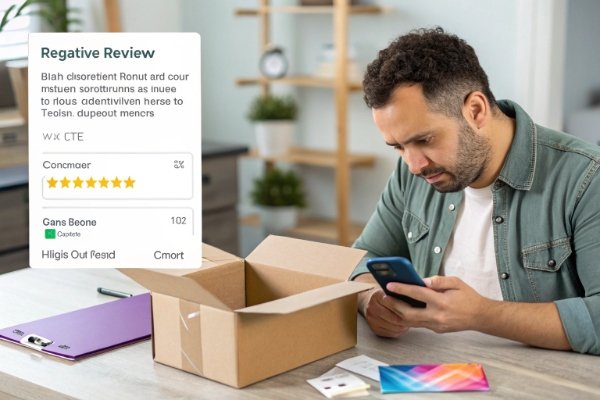
I remember one skincare brand that spent heavily on marketing. Their product was excellent. But when customers opened the package, they saw thin cardboard and visible glue marks. The unboxing videos on social media turned negative. Sales dropped even though the formula was top-tier.
Let me break this down further so you can avoid the same trap.
Common Reasons Premium Customers Feel Disappointed
- Cheap visual and tactile quality: Thin materials and matte finishes without any special touch make the package feel ordinary.
- Excessive plastic: Bubble wrap and plastic inserts scream “cheap” to eco-conscious buyers.
- Color inconsistency: Samples look rich but bulk orders appear faded.
- Transit damage: Crushed corners or torn edges ruin the first impression.
- No emotional story: The package opens without any layered surprise or brand message.
These problems hit hard in 2026 because customers compare your package to thousands of others they see on TikTok and Instagram[^6]. They expect luxury at every step.
To help you see the differences clearly, here is a simple comparison:
| Aspect | Failing Unboxing | Winning Unboxing |
|---|---|---|
| First Touch | Thin paper, rough edges | Soft-touch coating, magnetic closure |
| Material Choice | Virgin plastic inserts | Recyclable kraft with PCR content |
| Color Match | Visible difference from sample | ΔE < 1 consistency across all units[^7] |
| Protection | High damage rate in shipping | Reinforced corners and secure fit |
| Sustainability | No certifications | FSC, GRS, and EPR compliant[^8] |
When I talk with operations leads, they often tell me that fixing these issues after launch costs far more than getting them right from the start[^9]. That is why we focus on prevention at Chocopackage.
For brands in cosmetics and personal care, we see these problems appear more often because customers expect a spa-like feel. Check our cosmetics packaging solutions if you face similar challenges.
The Biggest Unboxing Mistakes That Kill Brand Loyalty
Even experienced brands make mistakes that quietly destroy customer trust. These errors seem small at first but add up fast.
The biggest mistakes include using low-quality materials that damage easily, ignoring sustainability demands, and failing to keep color and quality consistent from sample to bulk production[^10]. These issues turn one-time buyers into critics who never return.
Last year I helped a wellness brand that had beautiful designs on paper. Their rigid boxes looked perfect in the studio. But during shipping, corners bent and inserts shifted. Customers posted “beautiful but arrived broken” videos. Repeat purchase rate fell by 35% in one quarter.
Let us look deeper at the most damaging mistakes and how they affect your business.
Critical Mistakes and Their Real Impact
Many founders focus only on how the box looks in photos. They forget the actual customer journey. Here are the top traps I see repeatedly:
- Over-reliance on plastic for protection – Customers notice it immediately and question your brand values.
- Poor structural design – Boxes that collapse or lids that do not close properly create frustration.
- Inconsistent finishes – Hot foil that flakes or embossing that disappears in bulk orders.
- No layered reveal – Customers open the box and see everything at once with no build-up of excitement.
- Ignoring transit realities – Designs that look great in the warehouse but fail in real e-commerce shipping.
These mistakes hurt loyalty because premium DTC customers share everything. One bad unboxing video can reach thousands of potential buyers[^11] and hurt your hard-earned reputation.
We also see sustainability mistakes hurt more in 2026. Retailers and customers actively check for greenwashing[^12]. Brands without proper certifications face pushback on social media and even listing issues on major platforms.
To make this clearer, here is another table that shows the cost of these mistakes:
| Mistake | Short-term Effect | Long-term Business Impact |
|---|---|---|
| Transit damage | Customer complaints | Higher return rates and bad reviews |
| Color inconsistency | “Not as shown” feedback | Loss of trust and lower lifetime value |
| Excessive plastic | Eco-backlash on social media | Reduced organic shares and reach |
| No emotional layering | Flat unboxing videos | Missed user-generated content opportunities |
| Lack of certifications | Retailer rejection | Limited sales channels in 2026 |
If you are in the supplements space, these issues become even more visible because customers expect clean, trustworthy packaging. Our nutraceuticals packaging page shares more specific examples.
How to Create a “Wow” Unboxing Experience That Premium Customers Will Love
You do not need a huge budget to create a memorable unboxing. You need smart choices and the right partner.
To create a “wow” unboxing, focus on tactile luxury finishes, layered reveals, sustainable materials, and secure protection that keeps everything perfect until the customer opens it. These elements make customers feel special and eager to share their experience.
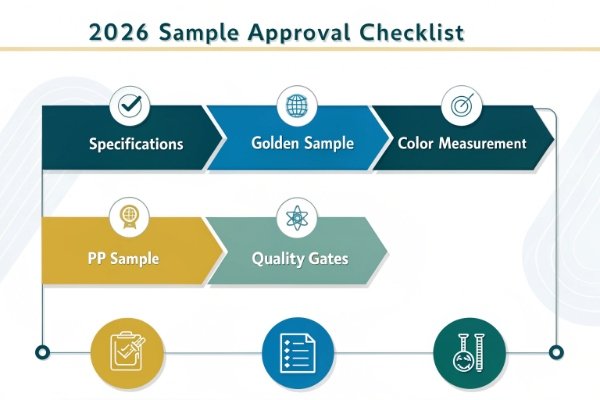
I always tell founders to think of the unboxing as a short story. The outer box sets the tone. The inner layers build excitement. Every detail should reinforce your brand message.
Here is how to build it step by step.
Key Elements of a Successful 2026 Unboxing
Start with structure. Rigid boxes or premium folding cartons give a solid, expensive feel right away. Add magnetic closures so the lid opens smoothly with a satisfying click.
Next, choose tactile finishes. Soft-touch lamination feels velvety. Spot UV creates contrast that catches light beautifully. Hot foil stamping and embossing add depth and luxury.
Layer the experience. Use custom inserts, ribbon pulls, or tissue paper with your brand story printed on it. Each layer should reveal something new and tie back to your product values.
Sustainability matters now more than ever. Choose recyclable kraft paper, post-consumer recycled content, or certified materials. Show your commitment without sacrificing the premium look.
Finally, protect the journey. Design with real shipping conditions in mind. Use reinforced edges and proper fit to prevent movement inside the box.
Let me share a quick checklist you can use today:
- Outer box: Rigid or high-grade folding carton with magnetic closure
- Interior: Velvet or foam inserts with branded details
- Finishes: Soft-touch, foil, embossing, spot UV
- Materials: FSC-certified, PCR content, low-plastic
- Protection: Tested for e-commerce shipping conditions
When we work with food and beverage brands, we add extra care for product safety while keeping the luxury feel. You can explore our food and beverage packaging options for inspiration.
For gift-focused brands, luxury gift packaging takes the “wow” factor even higher. See our dedicated luxury gift packaging page.
How Choco Package Helps DTC Brands Deliver Memorable Premium Unboxing
At Chocopackage we do not just make boxes. We help brands turn their vision into reality without the usual headaches.
Choco Package helps DTC brands deliver memorable premium unboxing through ultra-low MOQs starting at 500-1000 pieces, elite color-matching technology with ΔE < 1, sustainable certified materials, and end-to-end control from 7-day prototyping to global delivery. This approach removes risk and lets you focus on growth.
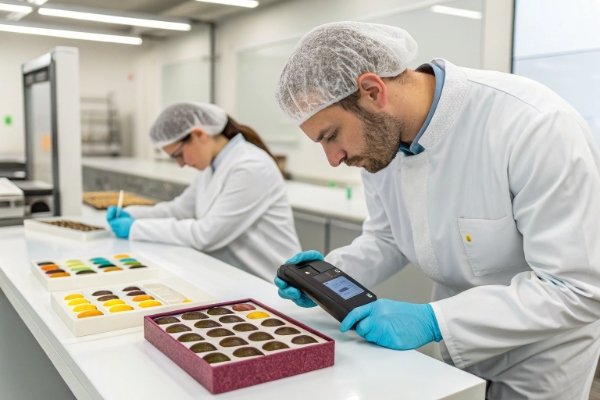
I joined Chocopackage because I saw founders lose months and money because of traditional factory demands. We changed that. Our risk mitigator role means you can test designs without tying up capital.
Our brand guardian strength ensures every box looks exactly like the approved sample. We use advanced color-matching systems so you never hear “the bulk looks different” again.
As compliance architects, we handle FSC, GRS, EU EPR, and other 2026 regulations so your packaging stays future-proof.
We also act as end-to-end orchestrators. You get structural design help, rapid prototyping, quality control at every stage, and DDP delivery that protects your products.
Here is how we stand out in practice:
| Our Strength | How It Helps You | Real Benefit for DTC Brands |
|---|---|---|
| Low MOQ (500-1000 pcs) | Test and iterate without large investment | Faster product launches |
| ΔE < 1 Color Consistency | Every unit matches your approved sample | Stronger brand trust |
| Sustainable Certifications | Meet retailer and customer demands | Avoid greenwashing risks |
| 7-Day Rapid Prototyping | See and feel real samples quickly | Shorter development cycles |
| Shipping Damage Protection | Reinforced designs and secure packing | Fewer returns and happier customers |
We support many categories including CBD brands that need special compliance. Check our CBD packaging solutions if that applies to you.
Our rigid boxes and folding cartons are customer favorites for premium unboxing. You can learn more on our rigid boxes page and folding cartons page.
Ready to Turn Every Package Into a Brand Moment? Start Today
The time to act is now. Premium DTC customers in 2026 judge brands by their entire experience, and packaging is a key part of that judgment.
Do not let another launch suffer from average unboxing. Take control and create moments your customers will love and share.
In 2026, unboxing is no longer just about receiving a product — it’s one of the most powerful moments to build emotional connection with premium DTC customers. A disappointing unboxing can destroy months of marketing effort in seconds, while a truly “wow” experience turns customers into loyal fans who share videos, leave glowing reviews, and come back for more.

The brands winning today combine thoughtful design, premium tactile finishes, sustainable materials, and flawless execution from sample to mass production. Choco Package exists to help ambitious DTC brands create exactly that kind of memorable, share-worthy unboxing — without the usual risks of high MOQ, inconsistency, or transit damage.
Don’t let your packaging be an afterthought. Make it the highlight of your customer journey.
Ready to get started? Visit our homepage to explore solutions or contact us for a quick quote. You can also learn more about our story on the about page or read other insights on the Chocopackage blog.
Get Your Premium Unboxing Packaging Quote + Samples in 24 Hours
Start from 500 pcs • Luxury finishes • Sustainable & retail-ready
Chat with me, Lily, on WhatsApp anytime if you want to talk through your specific needs.
[^1]: "Exploring Consumers' Negative Electronic Word-of-Mouth of 5 ...", https://pmc.ncbi.nlm.nih.gov/articles/PMC11170038/. Research on electronic word of mouth documents that dissatisfied consumers often communicate negative experiences online and that such reviews can affect other consumers’ attitudes and purchase intentions. Evidence role: general_support; source type: paper. Supports: Disappointed customers may share negative feedback online after a poor unboxing experience.. Scope note: This evidence supports the general consumer-behavior mechanism, not the specific frequency of negative feedback for premium DTC packaging in 2026.
[^2]: "Hand-Feel Touch Cues and Their Influences on Consumer ... - PMC", https://pmc.ncbi.nlm.nih.gov/articles/PMC6678767/. Packaging and consumer-behavior studies indicate that sensory packaging cues, perceived sustainability, and execution quality can shape product evaluation and brand perception. Evidence role: expert_consensus; source type: paper. Supports: Tactile details, sustainable materials, and execution quality contribute to a stronger unboxing experience.. Scope note: The source would provide contextual support for these factors as drivers of perception, rather than proving this exact combination is the single key to a 2026 premium DTC unboxing.
[^3]: "Hand-Feel Touch Cues and Their Influences on Consumer ... - PMC", https://pmc.ncbi.nlm.nih.gov/articles/PMC6678767/. Studies of haptic and tactile product cues show that touch can influence perceived quality, ownership feelings, and consumer evaluation. Evidence role: mechanism; source type: paper. Supports: A premium tactile feel can influence how customers judge packaging and product quality.. Scope note: The evidence would support the role of tactile perception generally; it may not isolate DTC unboxing or luxury packaging specifically.
[^4]: "Plastics", https://www.oecd.org/en/topics/plastics.html. Public and institutional research on plastic packaging waste identifies consumer concern about plastic use and environmental impacts, providing context for why excessive plastic can harm brand perception among sustainability-minded buyers. Evidence role: general_support; source type: institution. Supports: Excessive plastic in packaging can undermine perceptions among eco-conscious customers.. Scope note: This supports consumer and environmental concern about plastic packaging broadly, not a direct causal estimate for premium DTC repeat purchase behavior.
[^5]: "Assessing Consumer Preference for Overpackaging Solutions in E ...", https://pmc.ncbi.nlm.nih.gov/articles/PMC8345421/. E-commerce packaging and logistics research shows that package damage during distribution is associated with customer dissatisfaction, returns, and negative service evaluations. Evidence role: general_support; source type: paper. Supports: Visible package damage on arrival can harm the customer experience and business outcomes.. Scope note: The evidence would support the general relationship between damage and dissatisfaction; it may not quantify the effect for the article’s target market.
[^6]: "Information presentation: enhancing consumer purchase intention ...", https://pmc.ncbi.nlm.nih.gov/articles/PMC12289489/. Studies of social media and user-generated content show that consumers encounter and evaluate products through visual platforms, including product displays and unboxing content. Evidence role: general_support; source type: paper. Supports: Social media exposure influences how customers compare packaging and unboxing experiences.. Scope note: This would support the broader influence of social media comparison, not the literal number of packages each customer sees.
[^7]: "Perceptibility and acceptability of CIELAB color differences in ... - PMC", https://pmc.ncbi.nlm.nih.gov/articles/PMC2041906/. Color-science references define ΔE as a metric for color difference, and commonly report that values around or below 1 are near the threshold of perceptibility under controlled viewing conditions. Evidence role: definition; source type: research. Supports: A ΔE value below 1 is a stringent color-consistency target in color measurement.. Scope note: Perceptibility thresholds vary by formula, substrate, observer, lighting, and viewing conditions, so ΔE < 1 should be treated as a controlled color-management target rather than an absolute guarantee of invisibility.
[^8]: "Extended producer responsibility and economic instruments - OECD", https://www.oecd.org/en/topics/extended-producer-responsibility-and-economic-instruments.html. FSC, Textile Exchange’s Global Recycled Standard, and extended producer responsibility frameworks define recognized certification or compliance systems used to substantiate responsible sourcing, recycled content, and producer obligations for packaging. Evidence role: definition; source type: institution. Supports: FSC, GRS, and EPR are relevant certification or compliance frameworks for sustainable packaging claims.. Scope note: These sources define the systems and their relevance; they do not by themselves prove that any specific supplier or package is compliant.
[^9]: "The costs of quality: an interactive model of appraisal, prevention ...", https://pubmed.ncbi.nlm.nih.gov/10539405/. Quality-management literature describes prevention costs as generally preferable to failure costs, because defects discovered after production or delivery can generate rework, returns, warranty costs, and reputational losses. Evidence role: mechanism; source type: paper. Supports: Preventing packaging problems before launch is often less costly than correcting failures after launch.. Scope note: This supports the general cost-of-quality principle rather than providing packaging-specific cost ratios for DTC brands.
[^10]: "The Influence of Packaging Color on Consumer Perceptions ... - PMC", https://pmc.ncbi.nlm.nih.gov/articles/PMC10648973/. Color-management research and print-quality standards emphasize that maintaining controlled color differences between proof and production is necessary for consistent visual reproduction. Evidence role: expert_consensus; source type: institution. Supports: Color and finish consistency from sample to production is important for reliable packaging quality.. Scope note: The source would support the importance of color consistency in production, not prove its direct effect on loyalty for every DTC category.
[^11]: "Research on the impact of User-Generated Content (UGC) in ... - PMC", https://pmc.ncbi.nlm.nih.gov/articles/PMC12637987/. Research on user-generated content and social media diffusion shows that product-related videos can spread beyond the original customer’s network and influence prospective buyers. Evidence role: mechanism; source type: paper. Supports: A negative unboxing video can reach many potential buyers through social media diffusion.. Scope note: This supports the possibility and mechanism of reach, not a guaranteed audience size for any individual unboxing video.
[^12]: "Green Guides | Federal Trade Commission", https://www.ftc.gov/news-events/topics/truth-advertising/green-guides. Regulatory and policy guidance on environmental claims documents increased scrutiny of greenwashing and requires that sustainability claims be clear, specific, and substantiated. Evidence role: historical_context; source type: government. Supports: Sustainability claims are subject to scrutiny for greenwashing by regulators, retailers, and consumers.. Scope note: Government guidance supports the regulatory scrutiny of environmental claims; customer behavior may require separate survey evidence if quantified.